
What is LiDAR?
Imagine being able to map the world in stunning 3D detail, down to the shape of each tree branch or the slope of a city street. That is the power of LiDAR, short for Light Detection and Ranging. Rather than relying on cameras or GPS alone, LiDAR uses rapid laser pulses to measure the distance between a sensor and its surroundings. The result is a precise 3D point cloud that captures the world as it truly is, rich with depth and accuracy.

Originally developed in the 1960s for atmospheric studies, LiDAR has evolved into one of the most powerful tools in modern geospatial science. Once confined to aircraft and research labs, it is now lightweight, affordable, and available on devices like the iPhone and iPad Pro. This accessibility has transformed LiDAR from a niche technology into a tool that anyone can use for mapping, visualization, and data collection.
Fun and Fascinating Use Cases
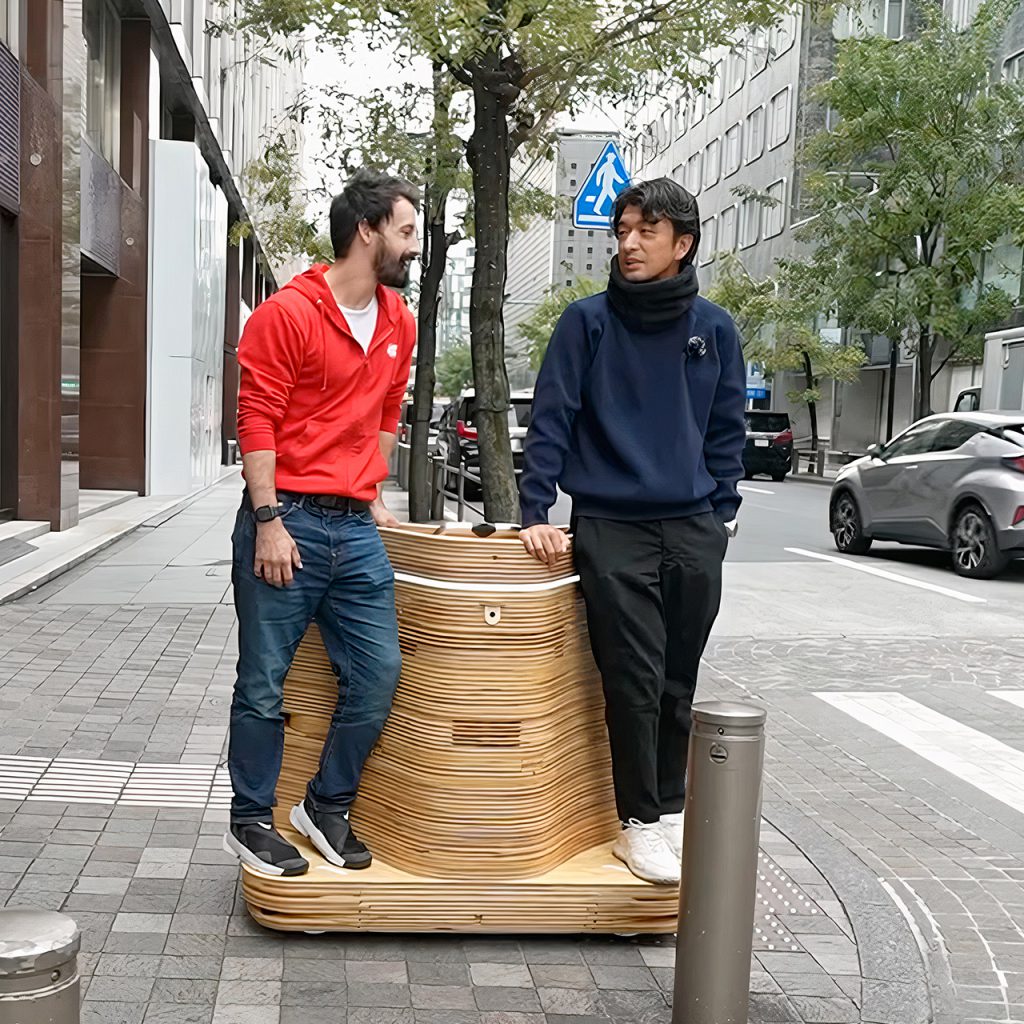
LiDAR’s versatility has made it a cornerstone of innovation across many industries. In transportation, it powers the eyes of self-driving vehicles. Autonomous taxis, such as the unique sidewalk taxi from Eno in Tokyo, rely on LiDAR to build real-time 3D maps of their surroundings and navigate safely through bustling walkways.
In environmental science, LiDAR helps researchers map forests, estimate biomass, and monitor coastal erosion. Archaeologists have used airborne LiDAR to uncover entire lost civilizations, revealing ancient temples and roadways that had been hidden beneath thick forest canopies for centuries.


How vGIS Uses LiDAR
At vGIS, LiDAR plays a key role in bringing GIS visualization into the field. Our platform combines LiDAR with augmented reality to display underground utilities in their real-world locations, collect information through 3D scanning, and show interactions between data and the real world. This integration helps field crews work more efficiently, reduces excavation risks, and makes spatial data easier to interpret.

We harness the LiDAR sensors built into modern iPhones and iPads, allowing users to scan their environment, collect accurate spatial information, and view it instantly in AR. What once required costly laser scanners can now be done with a common phone or tablet, making LiDAR-based GIS data collection faster and more accessible than ever before.
The Future of LiDAR
LiDAR technology continues to advance, offering higher accuracy, smaller sensors, and stronger integration with AR, AI, and digital twin platforms. For vGIS, these improvements mean more powerful and seamless AR experiences, and more efficient and simple data collection.
From the skies above to the devices in our hands, LiDAR is transforming how we see and understand the world, one laser pulse at a time.
